


Blog: Olive Oil Tasting in Crete, How the Island’s “Liquid Gold” Is Made
Long before it became a bestseller on supermarket shelves worldwide, Cretan olive oil was simply called chryso — gold. It’s the backbone of the island’s cuisine, its economy, and its identity. Crete alone produces around 5% of the world’s olive oil, and once you’ve tasted it fresh from a mountain village press, it’s easy to understand why.
The Koroneiki Olive: Small Fruit, Big Flavor
Most of Crete’s finest oil comes from the Koroneiki variety, a small olive prized for its high oil content and resistance to the island’s dry, rocky soil. Because the fruit is small and delicate, the best producers still harvest by hand, carefully selecting only the ripest olives rather than stripping branches with machines. It’s slower and more labor-intensive, but it’s also the reason Cretan extra virgin olive oil consistently ranks among the best in the world.
From Tree to Bottle: The Cold-Press Process
Harvest season in Crete usually runs from late autumn into the early months of winter, and timing matters enormously. Olives picked earlier produce a bolder, peppery oil, while later harvests give a milder, smoother taste. Once picked, the olives are washed, crushed, and pressed — traditionally in stone mills, though many producers today use modern mechanical presses that still respect the same principle: keep the temperature low.
That’s what “cold-pressed” really means. By extracting the oil without heat, producers preserve the antioxidants, polyphenols, and delicate aromas that give Cretan olive oil its rich color and slightly peppery finish. The very first oil to emerge — sometimes released by gravity alone, before any real pressure is applied — is considered the finest of all, and is usually bottled unfiltered to protect its natural flavor.
Why It’s Called Liquid Gold
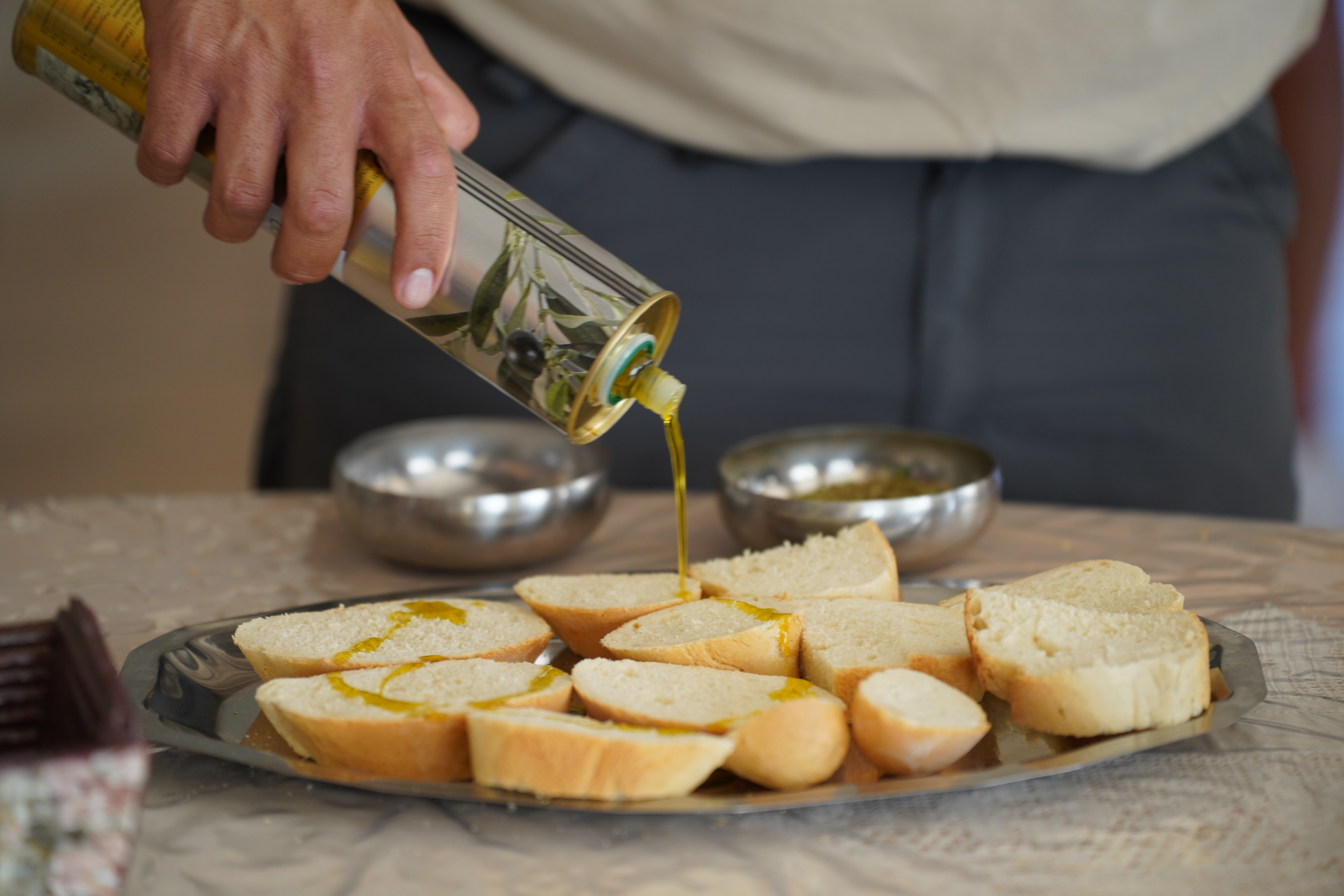
Locals don’t call it “gold” for nothing. Cretan olive oil is central to the Mediterranean diet, credited with a long list of health benefits thanks to its monounsaturated fats and high polyphenol content. But beyond nutrition, it’s a cultural cornerstone — poured generously over salads, bread, and slow-cooked dishes, and often the first thing a Cretan family will offer a guest to taste, alongside a glass of raki. In many mountain villages, olive oil production is still a family affair passed down through generations, with each producer proud of the particular taste their land and trees create.
Taste It Where It’s Made
Reading about Cretan olive oil is one thing — tasting it fresh in the village where it was pressed is another entirely. On our Minoan Route safari, after exploring the Aposelemi dam and the ruins of the ancient Roman aqueduct of Lyttos, we stop in the small mountain village of Kastamonitsa, where you’ll join the locals for a genuine raki and olive oil tasting — the kind of experience you simply can’t book at a supermarket counter. From there, the real off-road adventure begins as we climb into the mountains along ancient Minoan paths.
It’s a small stop with a big payoff: a chance to taste, side by side, the very product that has shaped Cretan cooking, health, and hospitality for thousands of years.
If you want to understand Crete beyond its beaches, start with a spoonful of its most famous export — and taste it exactly where it comes from.
Ready to taste it yourself? Book your Minoan Route safari and enjoy an authentic olive oil and raki tasting in a traditional Cretan village.