


Blog: Life on the Lasithi Plateau, a Tradition That Resists Time
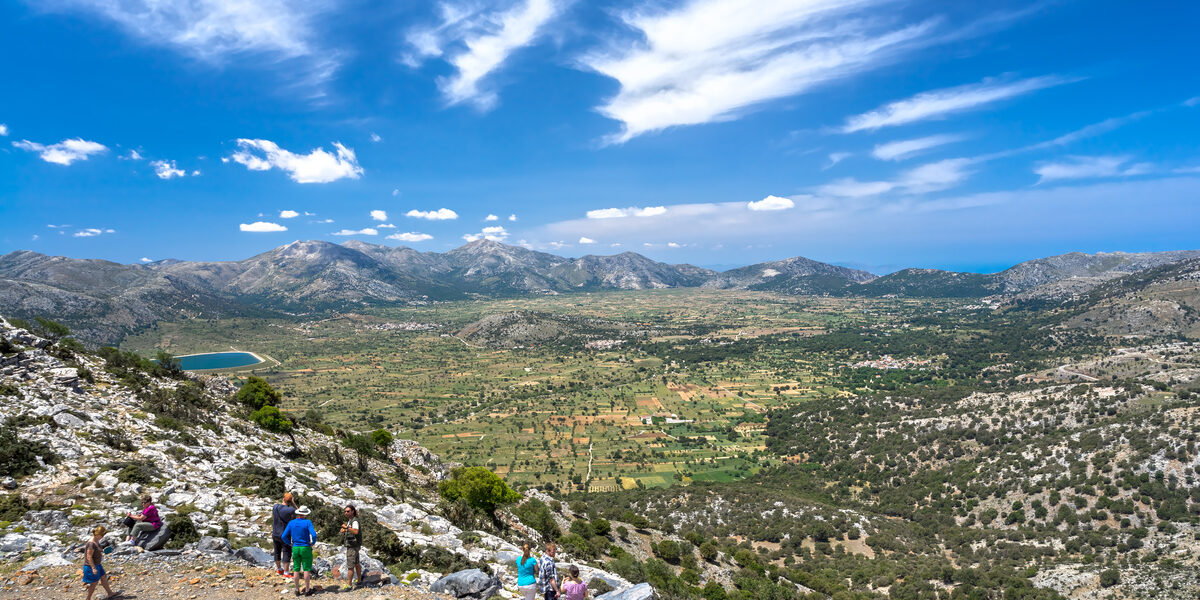
High in the mountains of eastern Crete, at an altitude of roughly 840 meters, lies a place where time seems to move a little slower. The Lasithi Plateau is the largest permanently inhabited highland plain in Crete, and one of the few places in the entire Mediterranean where people have lived, farmed, and celebrated at this altitude for thousands of years.
A Plateau Older Than Myth
Long before it became a favorite stop on Crete jeep safari routes, the Lasithi Plateau was already home to Minoan farmers drawn by its fertile soil and shallow water table. Locals say the region has been continuously worked since Neolithic times, and archaeologists have traced habitation here back through the Bronze Age. The plateau is also tied to one of Greece’s most famous myths: nearby Psychro Cave, often called the Diktaean Cave, is believed by legend to be the birthplace of Zeus himself, which is why some call this corner of Crete the “Bethlehem of Greek mythology.”
Through Venetian rule, the plateau earned a reputation as spina nel cuore — “a thorn in the heart” — thanks to the fierce resistance of its residents against foreign control. Villages were demolished, farming was banned for generations, and settlers were forbidden even to return. Yet the community endured, and when resettlement finally came in the 15th century, the plateau was rebuilt into what locals still proudly call the “garden of Crete.”
The White-Sailed Windmills
No image represents the Lasithi Plateau more than its windmills. At their peak, thousands of white-sailed wind pumps once dotted the plain, drawing groundwater up from wells to irrigate the fields below — reportedly one of the largest wind-powered irrigation systems in Europe at the time. Most have since been replaced by electric pumps, but dozens still stand, and a cluster of restored stone flour mills near the plateau’s entrance gives visitors a glimpse of how the whole valley once looked, sails turning in the wind against a backdrop of mountain peaks. Even today, locals will point out which mills belonged to which family, a small reminder of how closely tied this landscape still is to the people who work it.
Life That Follows the Seasons
Step onto the plateau today and agriculture still shapes daily life. Farmers grow potatoes, apples, cherries, and vegetables in soil enriched by centuries of careful irrigation, and donkeys are still a common sight working the fields. Traditions tied to the harvest have never disappeared either — villages across the plateau still celebrate local festivals like Potato Day in Tzermiado, a marrow festival in Avrakonde, and a traditional bread-baking day in Kato Metochi. These aren’t shows staged for tourists; they’re community events that have simply continued, generation after generation, tying each village’s calendar to the same rhythm of planting and harvest that shaped its ancestors’ lives.
Experience It From a Land Rover
Reading about the Lasithi Plateau is one thing — driving through it, stopping at a mountain kafenio, and tasting local raki, honey, and olive oil is another. On our Katharo safari route, we cross the Selakano Forest before dropping down onto the plateau itself, where you’ll see the windmills, the farmland, and the slower pace of Cretan mountain life up close, followed by a traditional Cretan lunch with unlimited wine.
If you’re planning a trip to Crete and want to see more than the beaches, the Lasithi Plateau is one of the island’s most authentic detours — a place where mythology, history, and everyday tradition still share the same field.
Ready to see it for yourself? Book your Katharo Route safari and discover the Lasithi Plateau the way it deserves to be seen.