


Blog: Life on the Omalos Plateau – The Place Where Time Still Stands Still
High in the White Mountains of western Crete, cradled by peaks that stay snow-capped well into spring, lies a hidden world that the modern age seems to have forgotten. The Omalos Plateau sits at more than 1,000 metres above sea level, a vast bowl of green fields ringed by grey rock, where the loudest sound is often the wind and the bells of grazing goats. Here, life moves to a rhythm that has barely changed in centuries. This is a place where time, quite literally, stands still.
A Fertile Bowl in the Heart of the Mountains
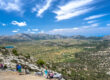
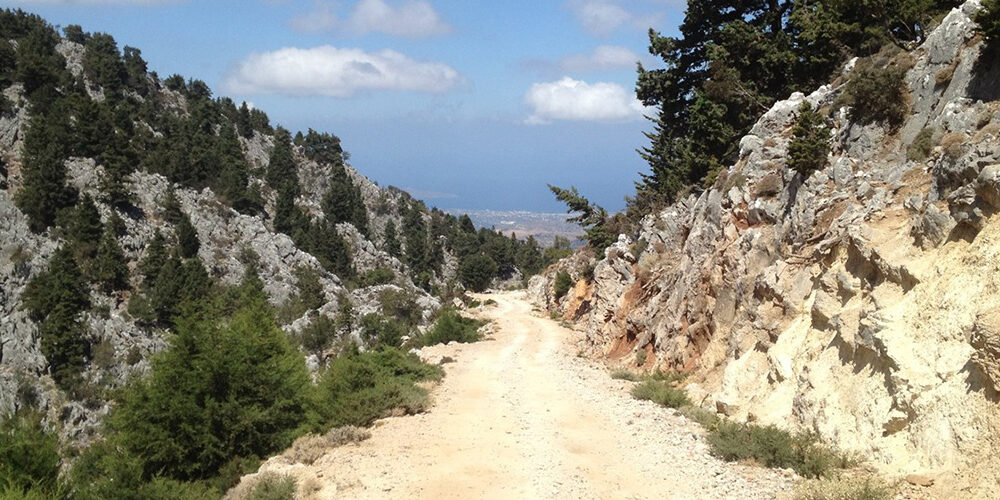
Reaching Omalos feels like crossing into another era. The winding mountain road climbs through pine forests and rocky slopes until, suddenly, the landscape opens into a wide, flat plain surrounded by the towering summits of the Lefka Ori. In winter the plateau fills with rainwater and snowmelt, sometimes turning into a shallow lake; by summer the water has drained away through natural sinkholes, leaving rich soil that local families have farmed for generations.
There are no crowds here, no resorts, no rush. Just a scattering of stone houses, small chapels, and fields worked by hand exactly as they always have been.
Where the Shepherds Still Rule
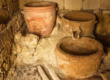
The people of Omalos are, above all, farmers and shepherds. As you cross the plateau you will see flocks of goats and sheep moving across the fields, and even the occasional donkey still at work – not as a tourist attraction, but because this is genuinely how life is lived up here. The mountains around Omalos are dotted with the mitato, the traditional round stone huts where shepherds have sheltered and made cheese for hundreds of years.
It is in these huts that the famous Cretan graviera cheese was born, produced from the milk of animals that graze on wild mountain herbs. The shepherds of the White Mountains are the guardians of a way of life – and of recipes – that most of Europe lost long ago.
Guardians of an Ancient Landscape
Omalos is best known as the gateway to the Samaria Gorge, one of the longest in Europe, but the plateau is far more than a starting point. The skies above are home to some of Crete’s most magnificent wildlife: griffon vultures, bearded vultures and golden eagles wheel over the peaks, while the elusive kri-kri, the wild Cretan goat, picks its way across the cliffs.
This is a fiercely proud region, too. The mountain villages of western Crete were at the heart of the island’s long struggle for freedom, and that spirit of independence still runs deep in the people who call these highlands home. Their hospitality is legendary – a stranger who passes through will rarely leave without being offered a coffee, a raki, or a plate of something homemade.
Step Back in Time on the Traditional Chania Route
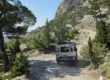
The magic of Omalos is that it cannot be rushed – and the best way to experience it is to leave the tourist trail behind entirely. Our Traditional Chania Route takes you deep into these very mountains by Land Rover, climbing far beyond the reach of ordinary cars to the highest points of the White Mountains, up to an authentic shepherd’s mitato at 1,350 metres. Along the way you will taste real Cretan graviera where it is made, take in panoramic views over Chania and the north coast, and share a table of homemade food, wine and warm hospitality in the village of Therisso.
It is more than a tour – it is a journey into a Crete that most visitors never see, the one where time still stands beautifully still.
Discover the mountains for yourself on the Traditional Chania Route with Safari Club Crete.